
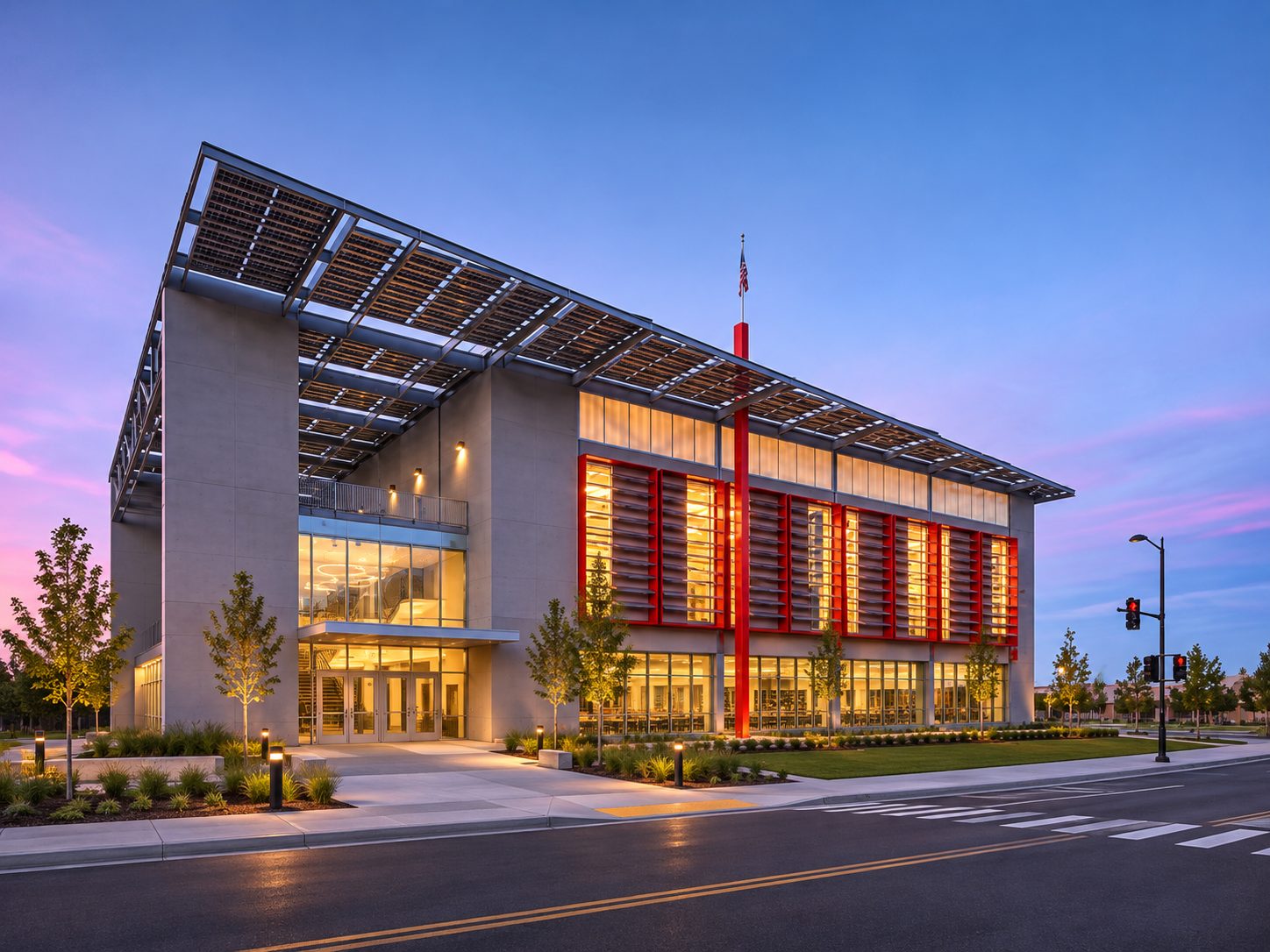
| Location | Private School Campus, Morgan Hill, CA |
| Sector | K-12 Education |
| Platform | EnergyCenter® by Autani |
| Project at a Glance | 6 buildings | 25 classrooms | 35 HVAC units | 108 lighting circuits |
| Also Included | Plus offices, gymnasium, library and exterior lighting |
| Control Strategies |
|
| System Features |
|
One platform for lighting and HVAC across a six-building campus
How a private school brought 35 standalone HVAC units and 108 lighting circuits under coordinated control with EnergyCenter® by Autani.
The Challenge
SIX BUILDINGS, SIX SEPARATE SYSTEMS
The administration wanted an affordable way to curb rising energy costs across six buildings. Each building ran its own standalone HVAC, there were no lighting controls, and doors were often propped open while HVAC kept running. The school needed one system to tie lighting and HVAC together campus-wide, simple enough for administrators to manage without special training.
The Solution
LIGHTING AND HVAC THAT RESPOND TOGETHER
EnergyCenter gave both systems a shared set of inputs (occupancy, schedules and building conditions) so they act in step instead of on separate timers.
Shared occupancy
Sensors across campus drive lighting, HVAC and plug loads from the same occupied or unoccupied state.
Context-aware setbacks
HVAC waits longer before setting back during school hours. After hours, delays shorten and lights turn off sooner.
Door-aware HVAC
A gym or classroom door open for more than 60 seconds sets back HVAC and emails staff. Normal operation resumes when it closes.
Coordinated event schedules
Holidays and events are set once in the EnergyCenter calendar. Gym lighting and HVAC run together for games and presentations.
The Results
MEANINGFUL ENERGY SAVINGS ACROSS THE CAMPUS
- 48% lighting energy reduction
- 31% HVAC energy reduction
- 85% PC and plug-load reduction
Savings are tracked in real time in EnergyCenter, giving staff the data to find further improvements. Beyond lighting and HVAC, classroom PCs hibernating when rooms were empty delivered the largest percentage reduction of any category.
Lessons Learned: Integrating Lighting and HVAC
01 One signal, two systems
Driving lighting and HVAC from the same occupancy and schedule data keeps them aligned. When a space empties, both respond together rather than on separate timers.
02 Control for how the building is really used
Propped-open doors weren’t a scheduling problem. Tying door contacts to HVAC let the system respond to real conditions that fixed schedules alone can’t address.
03 Unify separate systems on one platform
35 standalone HVAC units and 108 previously uncontrolled circuits came under one platform, with per-room HVAC and per-circuit wireless lighting control across all six buildings.
04 Build a platform, not a one-off project
As the campus grew, more exterior lighting and HVAC controls were added to the same system. A networked platform also fits where Title 24 is heading on automatic, multi-level and outdoor lighting controls and demand response.
Ready to connect lighting and HVAC on your campus?
Find your local Autani agent at autani.com/find-an-agent